
By Brent Wills

As part of my consulting work—particularly with larger, more conventional farmers–I try to stay up on the latest-and-greatest technology aimed at agriculture and try to understand what ideas are being floated to large commodity broadacre farms under the guise of commonly greenwashed terms like “sustainability” or “regenerative”. As such, I subscribe to several industry publications, one of those being Progressive Forage, and read an article in the September 2026 issue that I’d like to address.
The title of this article–“Engineered microbes could cut nitrogen costs, sharpen crop efficiency and ease environmental strain”—caught my eye. As a biological farmer and long-time proponent of soil health, I know a thing or two about how microbes already do those things, so obviously I was interested in learning more.
From the article: “We are developing bioengineered microbes that will capture nitrogen from the air and deliver it directly to crops, lowering fertilizer costs, reducing pollution and making agriculture less dependent on fossil fuels”.
Wait, WHAAAAT?!?!?!?
It continues: “A microbial fertilizer system would largely decouple crop production from natural gas markets, giving growers a more reliable and predictable fertilizer source” and “Instead of applying large amounts of synthetic fertilizer across an entire field, the company’s engineered microbes colonize plant roots and act as tiny living fertilizer factories”. Indeed!
Some folks are just always a little late to the party, I guess.
We already know this. Organic farmers and those who are intentionally building soil health and improving carbon cycling in their production systems have been utilizing this technique worldwide for centuries and it’s my contention that we don’t need ‘engineered microbes’ to do the job. The subject of the article correctly states that “Plants don’t have a way to make their own nitrogen fertilizer, but bacteria and microbes do. So what if we can engineer the microbes that naturally live on the roots of plants and making nitrogen for themselves to share the nitrogen with the plant?”
For the record, there are many, many species of soil microorganisms that convert nitrogen to share with their plant symbionts. Rhizobium, azotobacter, azospirillum, frankia, cyanobacteria, and many forms of nitrifying and decomposing microbes and fungi that break down dead organic material into forms of nitrogen that plants can use. In my opinion, this is one of the most beneficial and efficient biological systems in our agriculture and it has evolved over eons so that plants and soil microbes can work together to feed and protect one another.
However, the article then goes on to say that “Microbes don’t naturally share this precious resource. Why would they just give it away? We are using genetic engineering to change that behavior.”
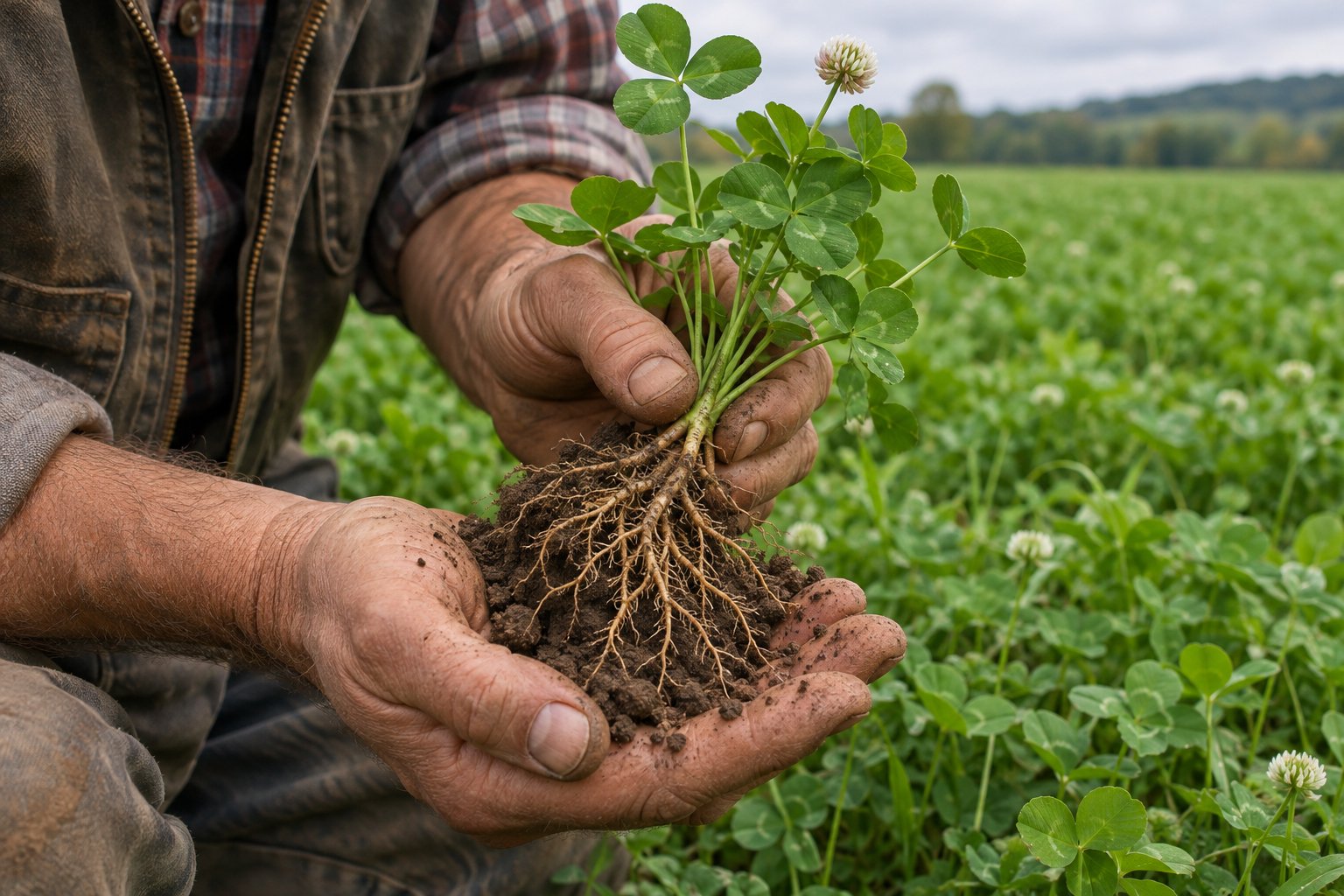
Bollocks. As biological and organic growers know, that is just flat-out wrong. Plants and microbes have perfected the means of working together, with plants exuding carbons and other energy-providing materials to soil microbes in exchange for all sorts of things in trade, including nutrients and ESPECIALLY nitrogen. For centuries, farmers have used leguminous crops as part of their rotations to do just that—provide nitrogen and other essential nutrients to plants directly from the relationships they have with soil microbes.
I totally understand the desire to make systems more efficient, reduce costs, improve yields, etc. I get it. But totally misrepresenting the facts is unacceptable, especially when the counter argument is so widely known and obvious. We do not need to engineer microbes to do what naturally-occurring species already do. A better call to action would be to stop destroying the soil system that has evolved to provide us with those benefits in the name of “progress”.
Improving soil health by minimizing disturbance (mechanical and chemical), promoting diversity, maintaining living roots and keeping the soil covered are tried-and-true ways of making farming successful, no matter the crop. Intentional management to improve the health of the soil ecosystem includes utilizing the microorganisms that have evolved with plants and we don’t need to resort to paying some unknown, unseen entity for bugs-in-a-jug to make the system work to our benefit. Just get out of the way and let those natural systems do what they have always done for free.
~ Brent